Xylanase Halal Supplier Guide for Industrial Baking
Source xylanase halal enzyme for baking with dosage, QC, COA/TDS/SDS, pilot validation, and supplier qualification guidance.
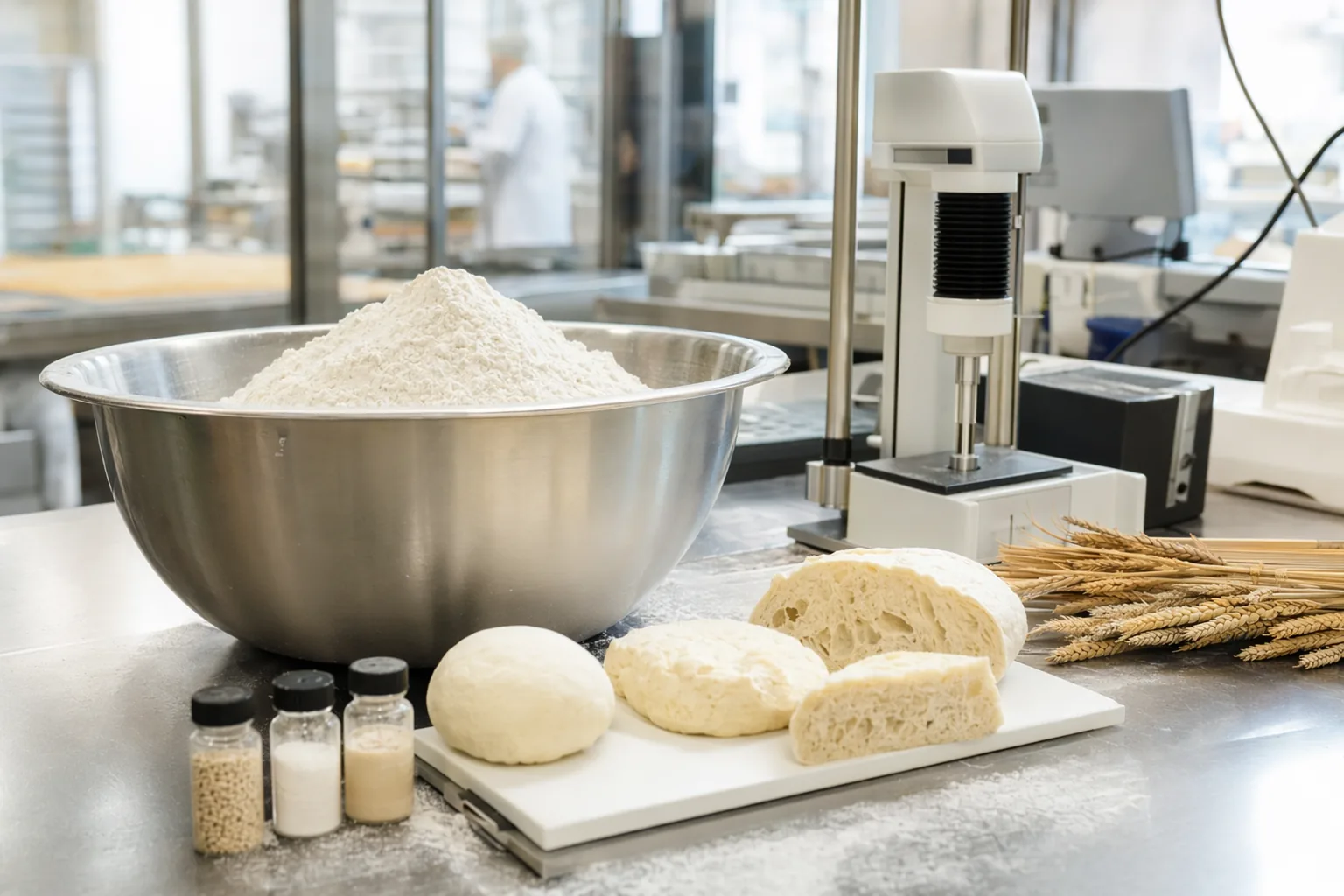
A practical procurement guide for bakeries and premix manufacturers evaluating halal-suitable xylanase enzyme for dough handling, loaf volume, crumb structure, and cost-in-use. To request a quote, send the product, quantity and destination through the form on the home page.
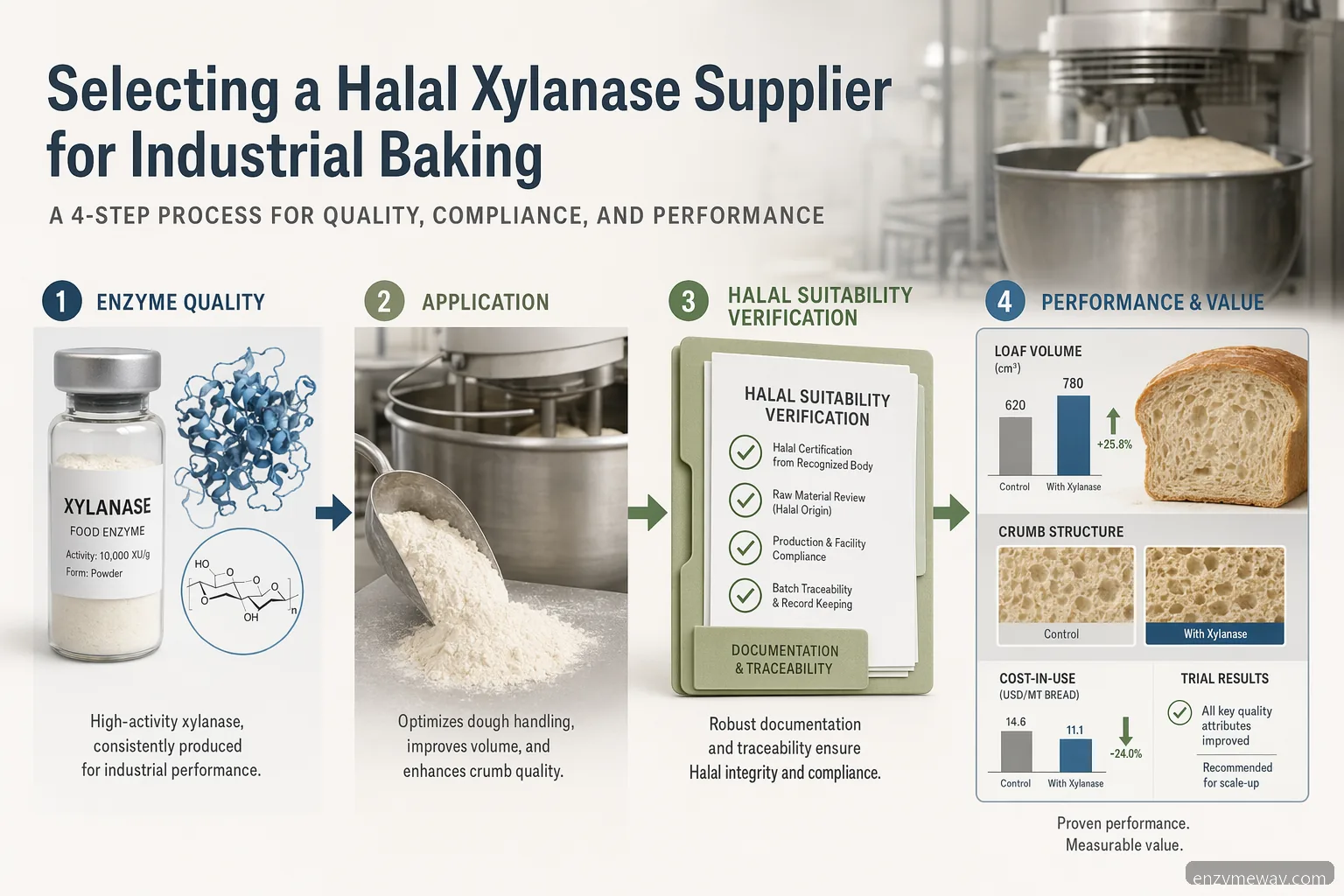
What Is Xylanase and Why Bakers Use It
Xylanase is an enzyme that hydrolyzes xylans, especially arabinoxylans naturally present in wheat and other cereal flours. In baking, controlled xylanase activity can reduce water-binding viscosity, release soluble arabinoxylan fragments, and support better gas retention during proofing and early baking. The practical result may be improved dough extensibility, smoother sheeting, increased loaf volume, finer crumb, and more consistent processing across flour lots. For industrial buyers, the important question is not only “what is xylanase” or “xylanase meaning,” but whether a specific xylanase enzyme fits your flour, formula, process time, pH, and heat profile. Xylanase in food is typically used as a processing aid or functional enzyme ingredient depending on local regulations and labeling rules. Validation should be conducted in the intended product format, such as pan bread, buns, flatbread, steamed bread, or frozen dough.
Best evaluated against flour ash, protein, damaged starch, and pentosan profile. • Useful in bread improvers, flour correction systems, and bakery premixes. • Performance varies by enzyme activity unit, side activities, and formulation carrier.
Xylanase Halal: What Buyers Need to Verify
The phrase xylanase halal should be treated as a documentation and supply-chain question. Xylanase itself is an enzyme class, not a halal status. Many commercial baking xylanases are produced by microbial fermentation, but halal suitability depends on the production strain, fermentation media, antifoams, recovery aids, carriers, diluents, and any preservatives used in the final product. Buyers comparing “xylanase halal ou haram” search results should request supplier documents rather than relying on generic descriptions. Ask whether any animal-derived raw materials, alcohol-based carriers, or non-halal processing aids are used. If your customer requires formal halal certification, confirm the certificate scope, product name or code, manufacturing site, expiry date, and certifying body before purchase. For Canada, the answer to “is xylanase halal in Canada” still depends on product-specific documentation and customer labeling requirements.
Request halal certificate or halal suitability statement when required. • Check whether the exact product code and manufacturing site are covered. • Confirm carriers, fermentation nutrients, and processing aids in writing. • Align with local food regulations and customer specification language.
Process Conditions and Starting Dosage for Baking Trials
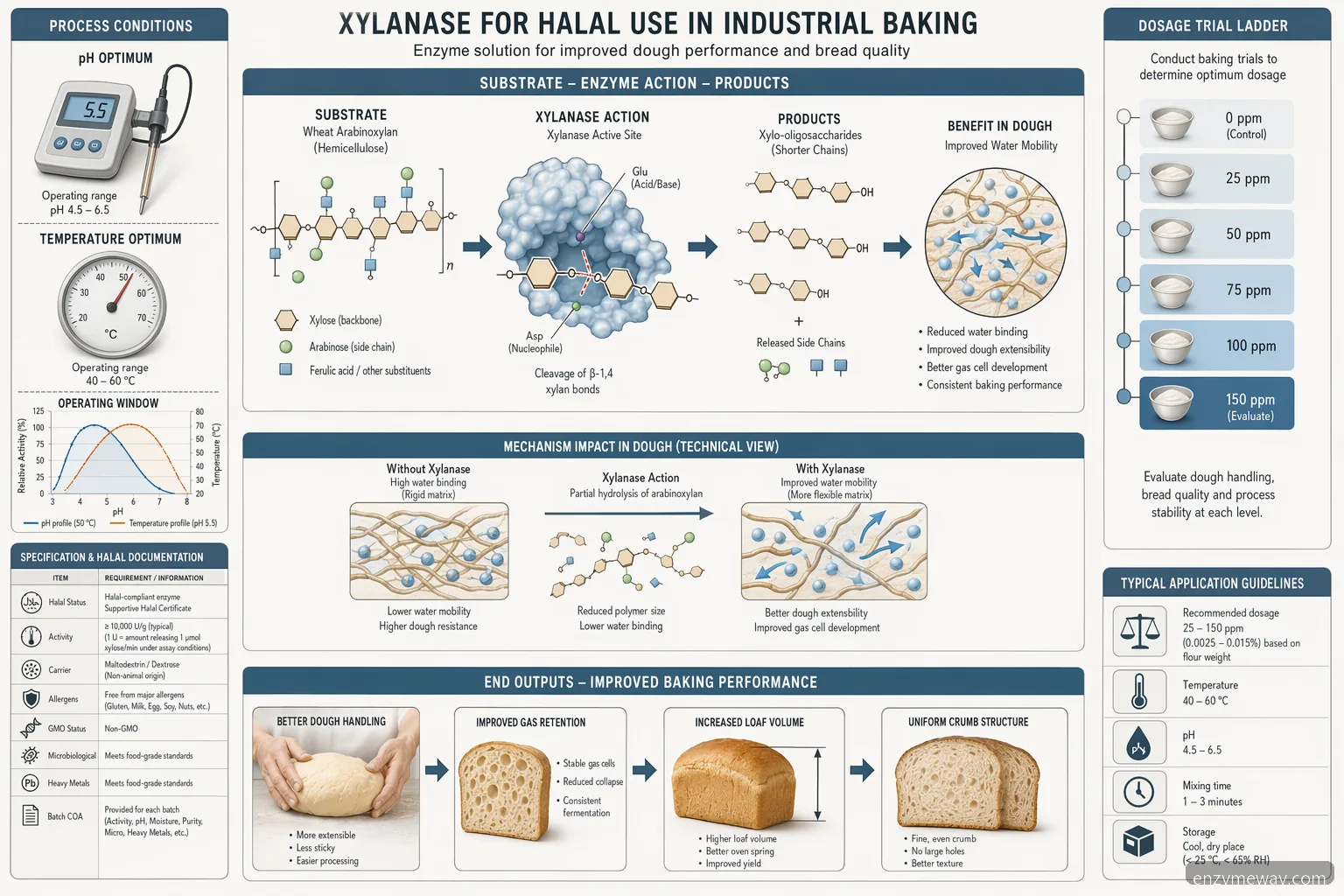
Xylanase baking performance should be screened under realistic plant conditions. Wheat dough typically operates around pH 5.0–6.2, with mixing and proofing temperatures commonly between 24–38°C. Many baking xylanases are active in mildly acidic to near-neutral dough systems and are largely denatured as crumb temperature rises during baking, often above 70–90°C depending on product geometry and bake profile. A practical starting trial range is often 10–80 ppm of enzyme preparation on flour weight, or an activity-based range specified by the supplier, because XU, BXU, TXU, and other units are not interchangeable. Overdosing can cause sticky dough, weak structure, or excessive extensibility. Always compare the proposed dose with the TDS, enzyme activity, flour type, fermentation time, oxidants, emulsifiers, amylase, and other enzyme systems in the improver.
Run stepwise trials at low, target, and high dosage. • Hold flour, yeast, water absorption, and mixing energy constant where possible. • Assess fresh, frozen, and retarded dough separately if applicable. • Do not convert activity units without supplier method details.
Quality Control Checks for Pilot Validation
Before commercial adoption, validate xylanase with both lab analytics and plant-scale baking tests. Useful flour and dough measurements include farinograph or Mixolab water absorption, extensograph or alveograph resistance and extensibility, dough stickiness, proof height, and tolerance to delayed processing. Finished product checks should include loaf volume, specific volume, slice structure, crumb cell uniformity, crust color, softness over shelf life, and sensory acceptance. For high-speed lines, observe divider scaling accuracy, dough balling, moulder performance, pan flow, and depanning behavior. Compare enzyme-treated batches with a no-enzyme control and your current improver system. The best supplier will help design a pilot protocol that separates xylanase effects from amylase, protease, lipase, ascorbic acid, emulsifier, and flour variability. Cost-in-use should be calculated per metric ton of flour and per finished unit, not only per kilogram of enzyme product.
Use retained flour samples for repeatability checks. • Record dough temperature after mixing and before makeup. • Track line stoppages, stickiness, and scrap rate. • Confirm performance after storage of the enzyme premix.
Supplier Qualification and Purchasing Documents
For B2B procurement, qualify the xylanase supplier before scaling volume. Minimum documentation should include a current Certificate of Analysis for each batch, Technical Data Sheet with activity method and recommended use range, Safety Data Sheet, allergen statement, GMO or non-GMO position where required, country of origin, storage conditions, shelf life, and food-grade statement. For halal-sensitive markets, request product-specific halal documentation or a signed suitability declaration with supporting raw material controls. Commercial evaluation should include lead time, minimum order quantity, packaging format, cold-chain or ambient stability, batch traceability, change notification policy, and technical service availability. Ask for a pilot sample from the same manufacturing route as the commercial product. Final supplier approval should connect technical performance, regulatory documentation, halal requirements, cost-in-use, and continuity of supply rather than selecting only by quoted price per kilogram.
Require COA, TDS, SDS, and traceability for each commercial lot. • Check storage temperature, humidity protection, and shelf-life guarantees. • Confirm change-control notice for strain, carrier, site, or formulation updates. • Evaluate technical support for plant trials and troubleshooting.
Technical Buying Checklist
Buyer Questions
Xylanase can be halal-suitable, but halal status is product-specific. The buyer must verify the production organism, fermentation nutrients, processing aids, carriers, and final formulation. A microbial xylanase is not automatically halal unless the supplier can document that non-halal materials are excluded or controlled. For customer-facing halal claims, request a valid certificate or written suitability statement for the exact product code.
In Canada, halal suitability still depends on the specific xylanase product and the documentation behind it. Buyers should review supplier declarations, halal certificates when needed, ingredient and processing aid information, and applicable food labeling expectations. If the enzyme is used in a bakery product for halal-labeled channels, confirm that the certificate scope covers the product, site, and current batch supply route.
In baking, xylanase modifies cereal arabinoxylans that influence dough viscosity and water distribution. Properly dosed xylanase may improve dough handling, machinability, oven spring, loaf volume, crumb uniformity, and softness. The effect depends on flour quality, formula, fermentation time, and interaction with amylase, emulsifiers, oxidants, and other improver components. Plant trials are essential before commercial rollout.
Start with the supplier’s TDS and run a controlled dose ladder, commonly including a low, target, and high dose within the recommended ppm or activity-unit range. Keep flour, water absorption, mixing time, dough temperature, proof time, and bake profile consistent. Measure dough stickiness, extensibility, line handling, loaf volume, crumb structure, and shelf-life softness. Avoid overdosing, which can weaken dough.
A qualified xylanase supplier should provide a batch COA, TDS, SDS, food-grade statement, allergen statement, origin or manufacturing information, storage and shelf-life guidance, and traceability data. For halal procurement, request a halal certificate or suitability declaration for the exact product code. Buyers should also ask about change notification, batch consistency, technical support, and pilot validation assistance.
Request a Quote: Wholesale Supply for Bakeries, Improver Makers and Resellers
We supply xylanase to industrial bakeries, flour-improver and premix makers, ingredient distributors and resellers on a quote basis. The product on this site is Xylanase Enzyme Powder (EC 3.2.1.8): a light tan to brown powder in activity grades of 10,000 – 100,000 U/g, packed in 25 kg fiber drums or custom packaging. Prices are quoted per order.
To get a quote, send three things: the product and activity grade, the quantity per order or per month, and the destination country or port. Add your application and process conditions if you also want trial guidance with the quote.
Use the quote form on the home page or email hello@mail.enzymeway.com.
Xylanase for Research & Industry
Need Xylanase for your lab or production process?
ISO 9001 certified · Food-grade & research-grade · Ships to 80+ countries
Frequently Asked Questions
Is xylanase halal?
Xylanase can be halal-suitable, but halal status is product-specific. The buyer must verify the production organism, fermentation nutrients, processing aids, carriers, and final formulation. A microbial xylanase is not automatically halal unless the supplier can document that non-halal materials are excluded or controlled. For customer-facing halal claims, request a valid certificate or written suitability statement for the exact product code.
Is xylanase halal in Canada?
In Canada, halal suitability still depends on the specific xylanase product and the documentation behind it. Buyers should review supplier declarations, halal certificates when needed, ingredient and processing aid information, and applicable food labeling expectations. If the enzyme is used in a bakery product for halal-labeled channels, confirm that the certificate scope covers the product, site, and current batch supply route.
What is xylanase used for in baking?
In baking, xylanase modifies cereal arabinoxylans that influence dough viscosity and water distribution. Properly dosed xylanase may improve dough handling, machinability, oven spring, loaf volume, crumb uniformity, and softness. The effect depends on flour quality, formula, fermentation time, and interaction with amylase, emulsifiers, oxidants, and other improver components. Plant trials are essential before commercial rollout.
How should an industrial bakery test xylanase dosage?
Start with the supplier’s TDS and run a controlled dose ladder, commonly including a low, target, and high dose within the recommended ppm or activity-unit range. Keep flour, water absorption, mixing time, dough temperature, proof time, and bake profile consistent. Measure dough stickiness, extensibility, line handling, loaf volume, crumb structure, and shelf-life softness. Avoid overdosing, which can weaken dough.
What documents should a xylanase supplier provide?
A qualified xylanase supplier should provide a batch COA, TDS, SDS, food-grade statement, allergen statement, origin or manufacturing information, storage and shelf-life guidance, and traceability data. For halal procurement, request a halal certificate or suitability declaration for the exact product code. Buyers should also ask about change notification, batch consistency, technical support, and pilot validation assistance.
Ready to source?
Turn This Guide Into a Supplier Brief Request a baking-grade xylanase quote, documentation pack, and pilot trial support from EnzymeWay.
Contact Us to Contributehello@mail.enzymeway.com