Xylanase for Animal Feed: B2B Process Guide
B2B guide to xylanase enzyme use in animal feed: dosage, pelleting, QC, COA/TDS/SDS, pilot validation, and supplier qualification.
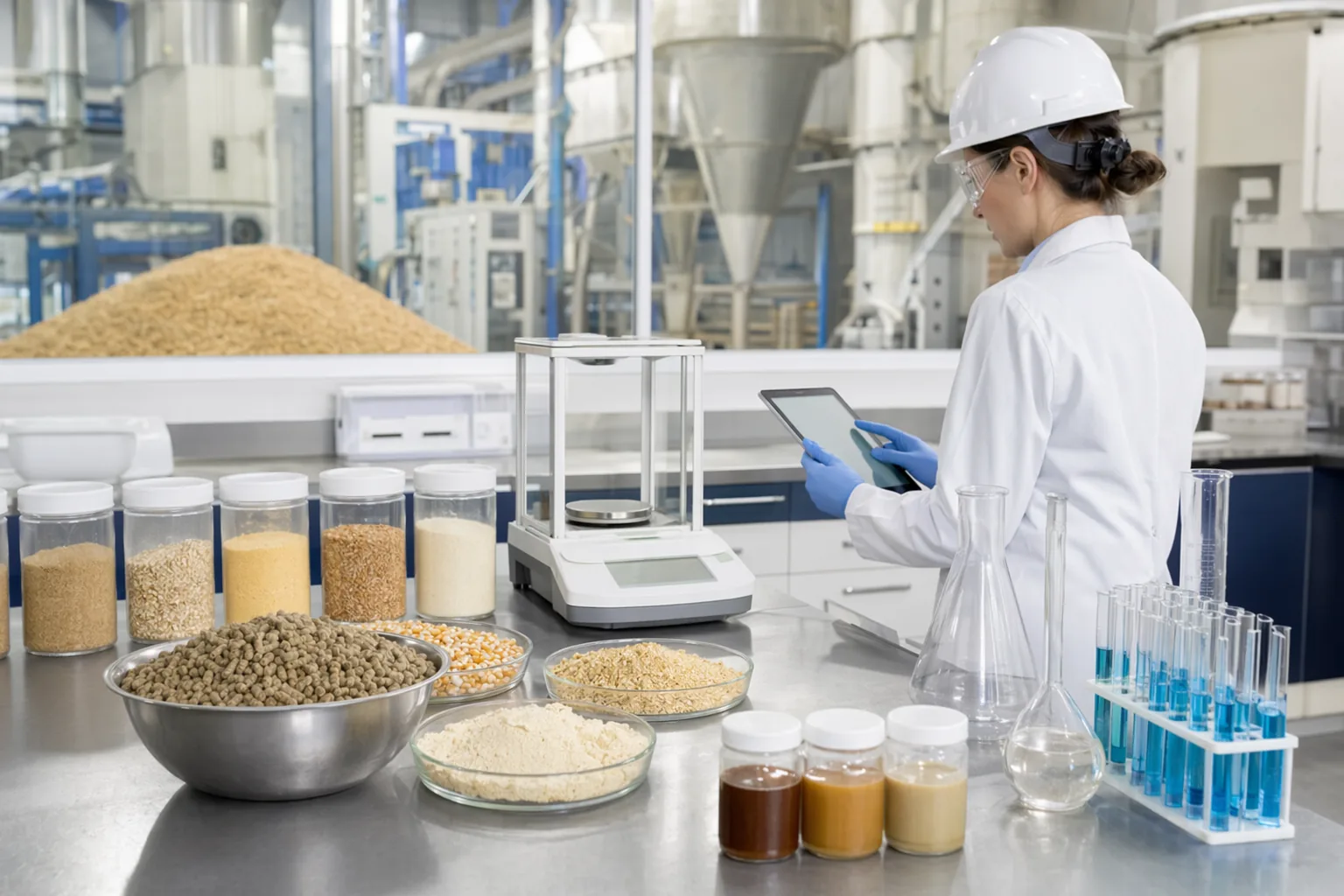
For feed mills comparing belfeed xylanase-type products or other xylanase enzyme options, this guide explains how to evaluate activity, processing fit, quality documentation, and cost-in-use before purchase.
What Is Xylanase in Animal Feed?
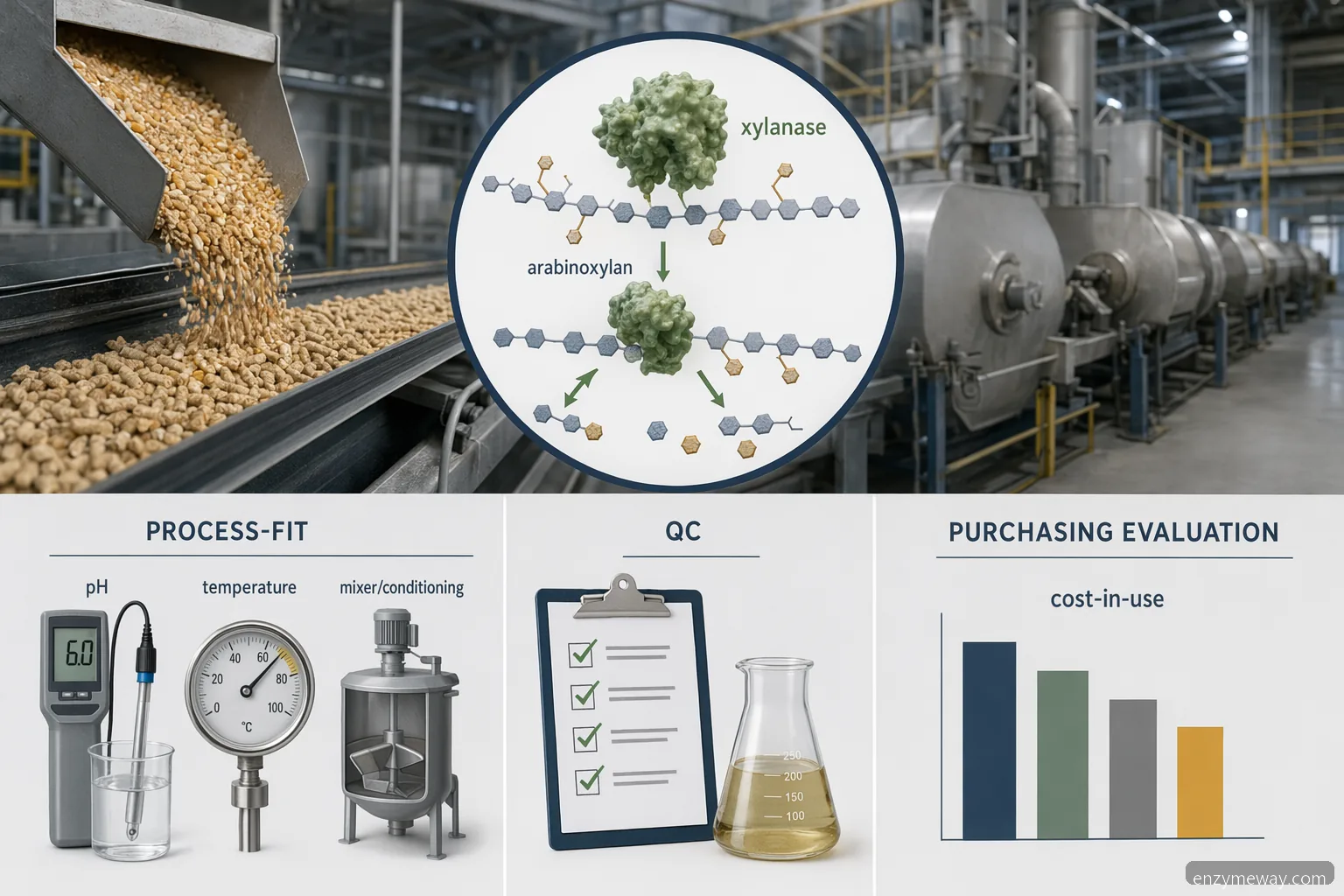
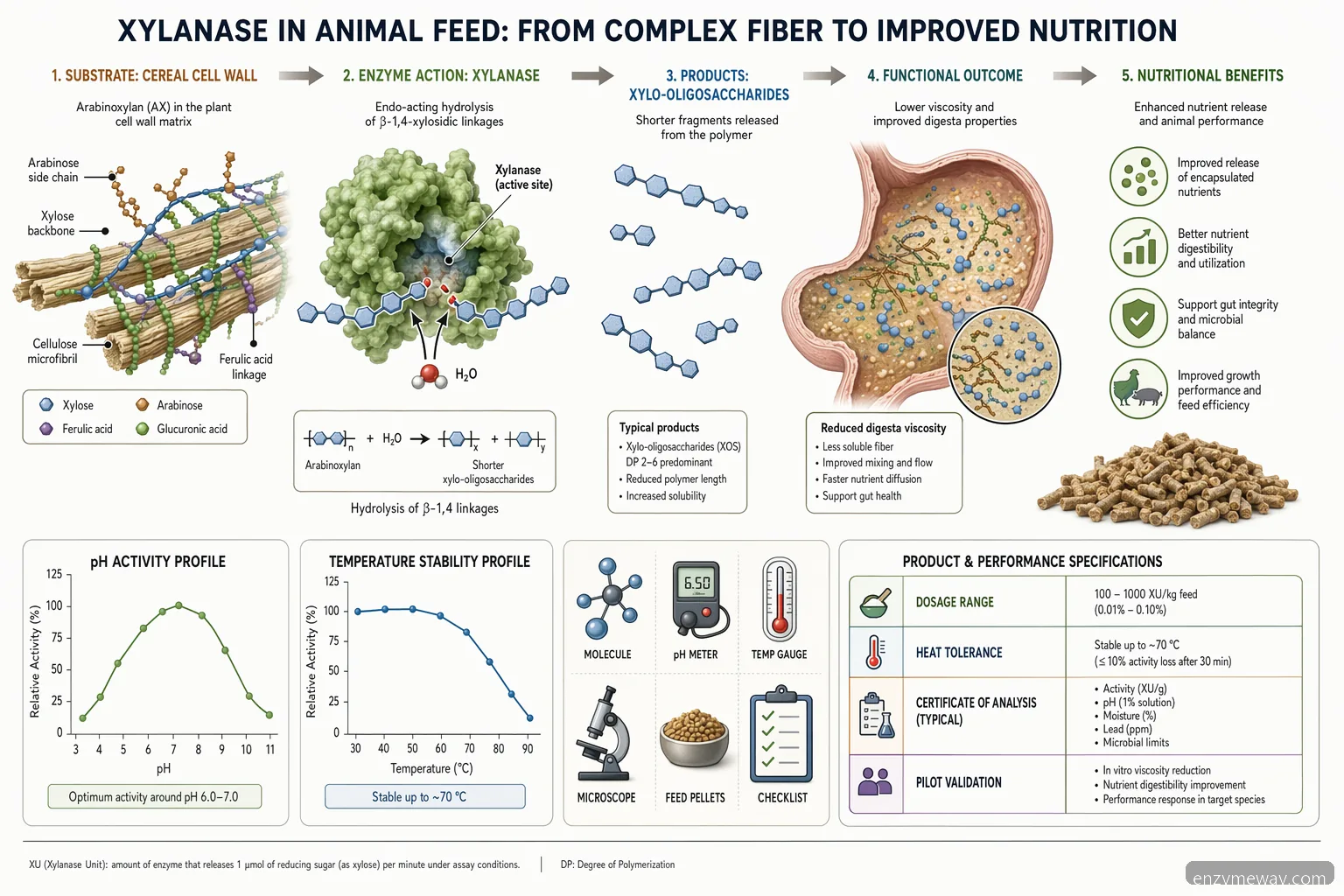
The xylanase meaning is straightforward: it is an enzyme that breaks down xylan, a major hemicellulose component of plant cell walls. In animal feed, xylanase is mainly used to target soluble and insoluble arabinoxylans found in wheat, rye, triticale, barley, corn co-products, and some by-products. For poultry, swine, and other monogastric diets, the commercial objective is typically better nutrient accessibility and improved feed formulation flexibility, not medical treatment. When buyers ask what is xylanase, the practical answer is a processing aid or feed enzyme selected by substrate profile, declared activity, stability, and compatibility with feed manufacturing. Xylanase in food, especially baking, may use different specifications than feed-grade xylanase, so the intended regulatory category, purity requirements, and label positioning must be clarified before procurement.
Primary substrate: arabinoxylan-rich cereal fractions • Typical use: feed enzyme premix, liquid dosing, or coated granule • Main buying concern: activity delivered after processing
Process Conditions and Dosage Planning
A xylanase enzyme should be selected around the feed mill’s real process conditions rather than brochure activity alone. Many feed xylanases operate effectively in the mildly acidic to near-neutral range, often around pH 4.0–6.5, but the supplier’s TDS should define the validated profile. Temperature exposure is critical: mash conditioning and pelleting commonly expose enzymes to 75–90°C for short residence times, while extrusion can be harsher. Thermostable or coated products may retain more activity, but this must be confirmed by post-pellet recovery testing. Dosage varies with enzyme concentration, diet substrate, and species; common commercial screening bands may range from about 1,000–16,000 activity units per kg of finished feed, or from 50–200 g per metric ton for concentrated dry products. Final dosage should be based on declared activity units, supplier method, and pilot results.
Confirm activity unit definition before price comparison • Test both mash and pelleted feed samples • Avoid assuming equal dosage across different assay methods • Review stability under actual conditioning time and temperature
QC Checks Before Commercial Scale-Up
Industrial enzyme purchasing should include quality control checks that connect product specification to feed mill performance. Request a COA for each lot showing declared xylanase activity, appearance, moisture or loss on drying where applicable, batch number, manufacturing date, and shelf-life. The TDS should describe optimal pH and temperature, carrier system, solubility or dispersion, recommended storage, and dosage guidance. The SDS should cover handling precautions, respiratory sensitization risk, spill response, and PPE. To address common searches such as xylanase danger, the relevant issue is occupational handling: enzyme dusts and aerosols can irritate or sensitize workers if poorly controlled. Evaluate dust level, granule integrity, liquid viscosity, and compatibility with premix carriers, acids, coccidiostats, minerals, and pelleting aids. Run retained-sample testing and verify activity after transport and storage.
Check COA against purchase specification • Verify SDS handling controls for enzyme dust or mist • Measure post-pellet enzyme recovery • Retain reference samples for dispute resolution
Pilot Validation and Cost-in-Use
A pilot trial should be designed to answer whether the selected xylanase improves the economics of a specific formulation and process. Start with a control diet and one or two dosage levels, then monitor feed conversion indicators, body weight or production metrics, litter or manure observations where relevant, and finished feed quality. In parallel, measure enzyme recovery in mash and pellets, pellet durability index, fines, moisture, and any changes in flowability. Cost-in-use should include delivered enzyme cost, required dosage, premix handling, storage losses, processing survival, reformulation value, and risk of under-dosing. A low price per kilogram can be expensive if activity concentration is low or pelleting recovery is poor. Buyers comparing belfeed xylanase search results with other xylanase options should normalize all offers to delivered activity per ton of finished feed.
Compare cost per effective activity unit, not only cost per kg • Include pelleting recovery in value calculations • Use statistically sound control and treatment groups • Document formulation, process, and sampling conditions
Supplier Qualification and Market Considerations
The xylanase-markt includes many feed enzyme suppliers with different production strains, carriers, coating technologies, activity assays, and regulatory support levels. Qualification should start with the intended market and species, then confirm feed-grade status, manufacturing controls, traceability, and the documents needed by your compliance team. If xylanase halal status is commercially important, request a valid supplier document from the relevant certifying body rather than relying on generic claims. Also ask whether the enzyme is produced by fermentation, what the carrier is, and whether the product contains other declared enzyme activities. Avoid unverifiable performance guarantees, especially when they are not tied to your diet composition and process data. A qualified supplier should support pilot validation, provide lot-to-lot consistency data, explain assay methods, and disclose storage limits clearly enough for procurement, QA, and production teams.
Request feed-market regulatory support for target countries • Confirm halal documentation only when issued and applicable • Review traceability and change-control procedures • Assess technical support, sampling plans, and complaint handling
Technical Buying Checklist
Buyer Questions
Xylanase is used to hydrolyze arabinoxylans in cereal-based feed ingredients such as wheat, rye, barley, and certain by-products. In feed manufacturing, the purpose is to improve substrate breakdown and support formulation value under defined conditions. It should be evaluated as an industrial feed enzyme with documented activity, stability, and regulatory support, not as a medical or supplement product.
Dosage should be based on activity units, diet substrate level, species, process temperature, and post-pellet recovery. A practical approach is to run a control and one or two treatment levels within the supplier’s recommended band, then measure finished feed quality, retained enzyme activity, and performance indicators. Do not compare products only by grams per ton because activity methods and concentrations differ.
The main xylanase danger in an industrial setting is worker exposure to enzyme dust or aerosols, which may cause irritation or sensitization if controls are inadequate. Review the SDS, use appropriate PPE, control dust during batching, and train operators in spill handling. For animal feed use, evaluate safety and compliance through supplier documentation, target-market regulations, and proper inclusion rates.
Xylanase halal status depends on the production process, fermentation inputs, carriers, processing aids, and certification scope. Buyers should request a current halal certificate or formal supplier statement when halal compliance is required. Do not assume that xylanase in food, baking, or animal feed is halal by default, because documentation must match the product grade, manufacturing site, and market requirement.
Request a lot-specific COA, current TDS, SDS, activity assay description, shelf-life and storage statement, feed-grade compliance information, and traceability details. For purchasing approval, also ask for sample availability, pilot-trial support, allergen or halal documents where relevant, and change-control procedures. These records help QA, procurement, and production teams compare suppliers on performance, compliance, and cost-in-use.
Xylanase for Research & Industry
Need Xylanase for your lab or production process?
ISO 9001 certified · Food-grade & research-grade · Ships to 80+ countries
Frequently Asked Questions
What is xylanase used for in animal feed?
Xylanase is used to hydrolyze arabinoxylans in cereal-based feed ingredients such as wheat, rye, barley, and certain by-products. In feed manufacturing, the purpose is to improve substrate breakdown and support formulation value under defined conditions. It should be evaluated as an industrial feed enzyme with documented activity, stability, and regulatory support, not as a medical or supplement product.
How should a feed mill choose a xylanase dosage?
Dosage should be based on activity units, diet substrate level, species, process temperature, and post-pellet recovery. A practical approach is to run a control and one or two treatment levels within the supplier’s recommended band, then measure finished feed quality, retained enzyme activity, and performance indicators. Do not compare products only by grams per ton because activity methods and concentrations differ.
Is there any xylanase danger in feed production?
The main xylanase danger in an industrial setting is worker exposure to enzyme dust or aerosols, which may cause irritation or sensitization if controls are inadequate. Review the SDS, use appropriate PPE, control dust during batching, and train operators in spill handling. For animal feed use, evaluate safety and compliance through supplier documentation, target-market regulations, and proper inclusion rates.
Can xylanase be halal for feed or food applications?
Xylanase halal status depends on the production process, fermentation inputs, carriers, processing aids, and certification scope. Buyers should request a current halal certificate or formal supplier statement when halal compliance is required. Do not assume that xylanase in food, baking, or animal feed is halal by default, because documentation must match the product grade, manufacturing site, and market requirement.
What documents should be requested from a xylanase supplier?
Request a lot-specific COA, current TDS, SDS, activity assay description, shelf-life and storage statement, feed-grade compliance information, and traceability details. For purchasing approval, also ask for sample availability, pilot-trial support, allergen or halal documents where relevant, and change-control procedures. These records help QA, procurement, and production teams compare suppliers on performance, compliance, and cost-in-use.
Ready to source?
Turn This Guide Into a Supplier Brief Request xylanase samples, COA/TDS/SDS, and pilot-trial support for your feed formulation.
Contact Us to Contributehello@mail.enzymeway.com