Working of Xylanases in Baking: Xylanase Specification Checklist for Baking
Compare xylanase for baking by activity, stability, dosage, documentation, pilot trials, QC, supplier fit, and cost-in-use.
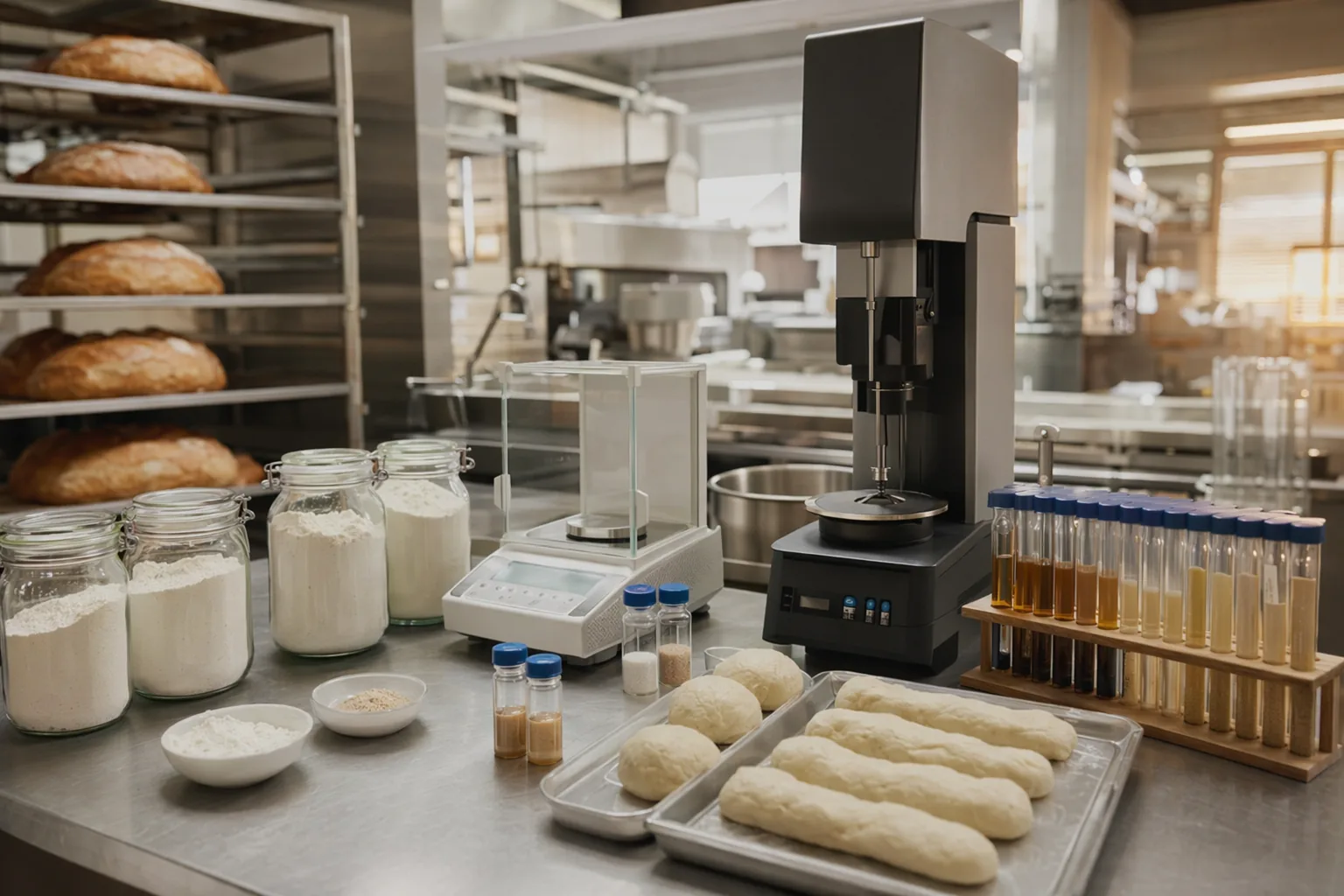
For industrial bakeries and premix manufacturers, xylanase selection is not just an activity-unit decision. The right xylanase enzyme for baking must fit flour quality, dough process, thermal profile, documentation needs, and cost-in-use targets.
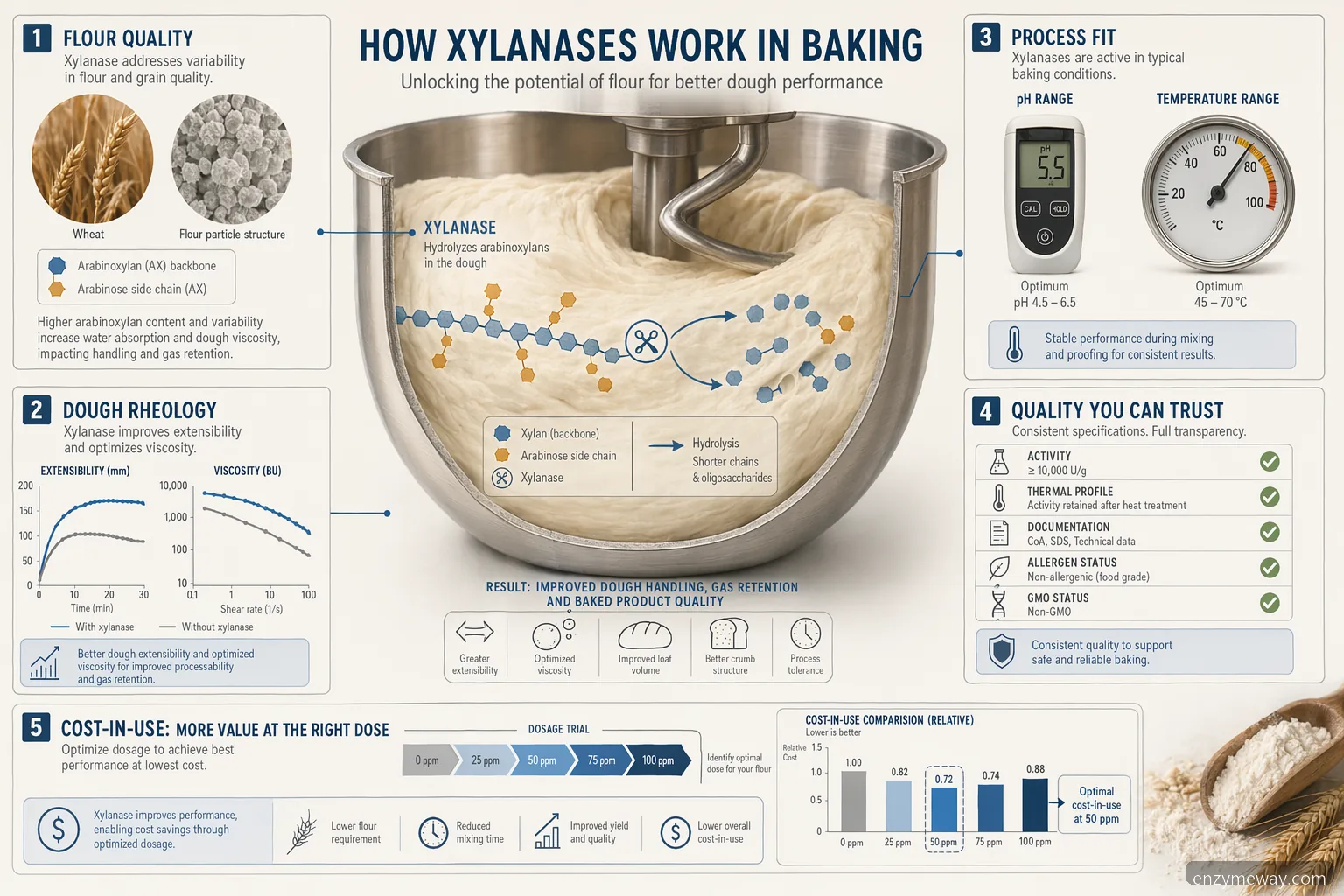
How the Working of Xylanases in Baking Affects Dough
The working of xylanases in baking is based on controlled hydrolysis of xylans, especially arabinoxylans present in wheat flour. These non-starch polysaccharides bind water and influence dough viscosity, gas retention, and crumb structure. A baking-grade xylanase breaks selected xylan backbones into smaller fragments, helping redistribute water from insoluble fiber into the gluten-starch matrix. In practice, this can support dough machinability, oven spring, loaf volume, and crumb softness when the enzyme is matched to the flour and process. Over-treatment, however, may create sticky dough, weak handling, or gummy crumb. This is why industrial buyers should evaluate enzyme profile, not only label activity. Xylanase in baking industry applications is usually optimized around dough pH near 4.5-6.0 and process temperatures from ambient mixing to early baking stages before enzyme denaturation.
Primary target: wheat flour arabinoxylans and related hemicellulose fractions. • Typical impact: water management, dough extensibility, gas cell stability, and crumb texture. • Risk of overuse: sticky dough, weak structure, or excessive softness. • Best evaluation method: pilot bake trials under plant-specific conditions.
Xylanase in Baking vs Baking Yeast: What to Compare
A common buyer question is whether to evaluate xylanase or baking yeast for a formulation challenge. They are not substitutes. Yeast ferments sugars to generate carbon dioxide and flavor compounds, while xylanase enzyme for baking modifies fiber structure to influence dough rheology and water release. If loaf volume is low because fermentation is insufficient, yeast level, yeast vitality, proofing time, and sugar availability should be reviewed. If dough is tight, flour absorption is inconsistent, or crumb is dense despite adequate fermentation, xylanase may be part of the solution. In enzyme systems, xylanase is often compared alongside amylase, lipase, glucose oxidase, and cellulase. The commercial decision should consider final product target, flour specification, line speed, improver system, clean-label objectives where applicable, and total cost-in-use rather than price per kilogram alone.
Yeast provides fermentation gas; xylanase modifies flour fiber functionality. • Xylanase can complement, not replace, standard yeast control. • Compare performance in the full improver system, not in isolation. • Use cost-in-use per metric ton of flour or finished dough for fair comparison.
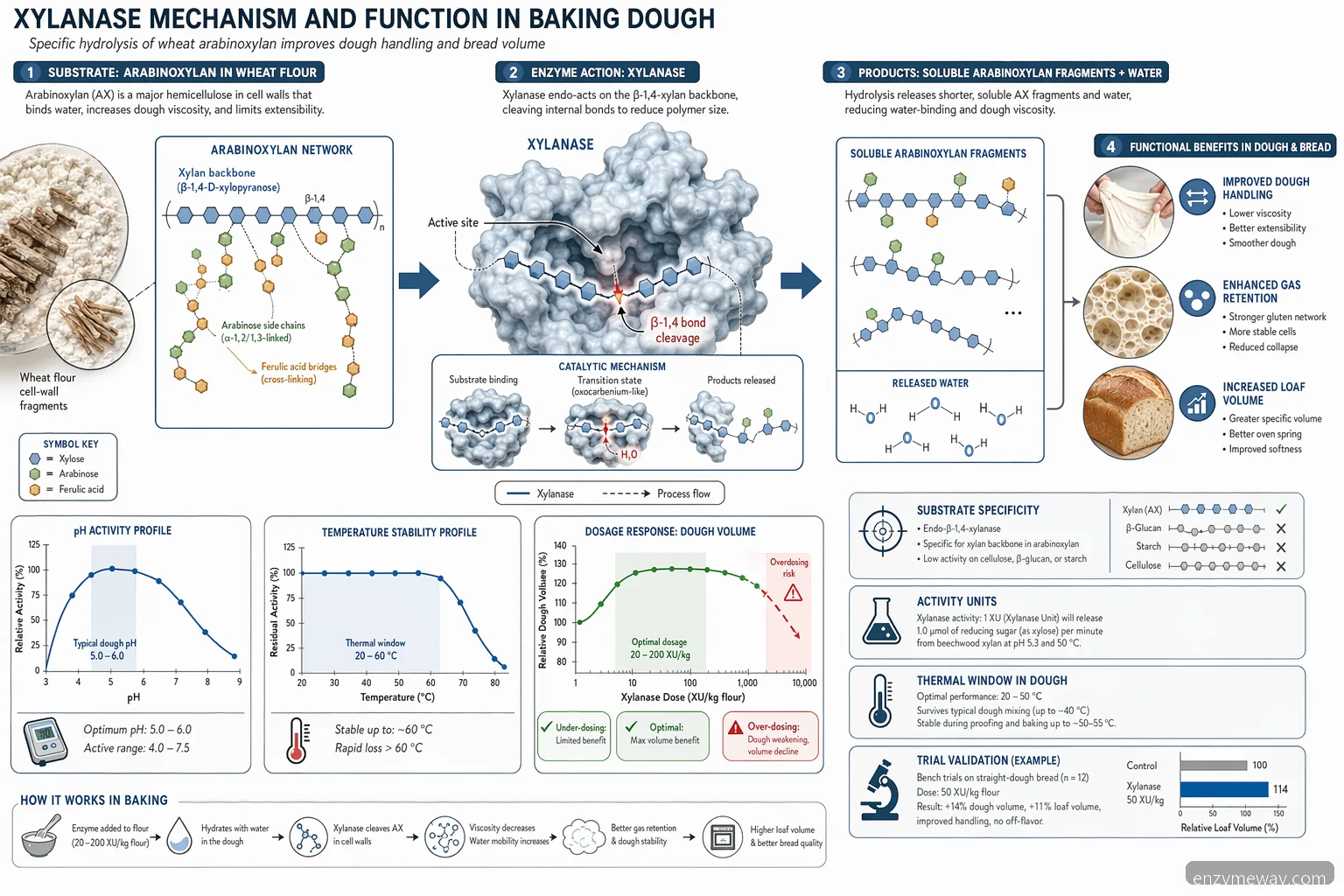
Specification Checklist for Xylanase for Baking
When sourcing xylanase for baking, request a technical data sheet that states activity units, assay substrate, assay pH, assay temperature, physical form, carrier, solubility, recommended dosage, storage conditions, and shelf life. Activity units are not always interchangeable because suppliers may use different analytical methods. Buyers should therefore compare performance in a standardized pilot bake, not by unit number alone. For flour-based baking, initial screening dosage may fall in a broad range such as 10-100 ppm of enzyme preparation on flour weight, depending on concentration and formulation. Confirm the recommended band directly with the supplier. Ask whether the product is designed for straight dough, sponge and dough, frozen dough, steamed bread, buns, pan bread, or improver premix use. Also verify compatibility with oxidants, emulsifiers, salt, sugar, fats, and other enzymes in the formula.
Request COA, TDS, SDS, and batch traceability before approval. • Confirm the activity method and whether units are supplier-specific. • Check recommended dosage as ppm on flour, not only percent in premix. • Validate compatibility with existing bakery improver components.
Process Conditions, Dosage Trials, and QC Checks
A practical pilot protocol should compare at least a control, low dose, target dose, and high dose under the same flour lot and process. Record flour protein, ash, moisture, damaged starch, falling number if available, and water absorption. For the enzyme, note addition point, dispersion method, mixing time, dough temperature, fermentation time, proof conditions, baking temperature, and final product measurements. Baking xylanases commonly show useful activity in mildly acidic to near-neutral dough systems, often around pH 4.5-6.0, and act before heat inactivation during baking. QC checks should include dough stickiness, extensibility, proof height, loaf volume, crumb grain, sliceability, moisture, and sensory texture. For frozen dough or long fermentation, include hold-time stress testing because excessive enzyme exposure can amplify effects. Keep an approved retained sample and compare each commercial batch against incoming COA values.
Suggested screen: control, low, target, and high dosage. • Track flour variation because arabinoxylan level and quality affect response. • Measure both processing behavior and finished bread quality. • Include hold-time or frozen-dough stress tests when relevant.
Supplier Qualification and Cost-in-Use Decision
A qualified xylanase enzyme supplier for baking should support more than quotation and lead time. Review product consistency, batch documentation, technical service, application knowledge, logistics reliability, packaging suitability, and regulatory documentation for your destination market. Ask for COA, TDS, SDS, allergen and GMO status where relevant, composition disclosure appropriate for industrial use, and recommended storage conditions. Do not rely on unverifiable performance claims; request pilot validation data or run your own bake tests using your flour, improver, equipment, and target shelf life. Cost-in-use should be calculated against flour treated, product yield, rework reduction, water adjustment, line efficiency, and finished product performance. The lowest price per kilogram is not always the lowest processing cost. Enzyme Way can support comparative selection for buyers seeking a xylanase supplier for baking, premix development, and scale-up validation.
Qualify suppliers on documentation, consistency, service, and logistics. • Calculate cost per metric ton of flour or finished product. • Confirm storage, handling, and shelf-life controls before purchase. • Use plant trials before converting to routine production.
Technical Buying Checklist
Buyer Questions
Xylanase in baking helps modify wheat flour arabinoxylans, which can improve water distribution, dough handling, gas retention, loaf volume, and crumb structure. The benefit depends on flour quality, formula, dosage, process time, and interaction with other improver ingredients. It should be validated in pilot baking because excessive dosage may cause sticky dough or weak crumb.
Compare suppliers by declared activity method, baking application data, pH and temperature profile, side activities, carrier, batch consistency, documentation, and technical support. Ask for COA, TDS, SDS, traceability, storage guidance, and regulatory information relevant to your sales market. Final selection should be based on controlled pilot trials and cost-in-use, not simply price per kilogram.
No. Xylanase and baking yeast perform different functions. Yeast ferments sugars and produces carbon dioxide for dough expansion, while xylanase modifies flour hemicellulose to influence water management and dough rheology. In many bread systems they work together. If fermentation is weak, review yeast and proofing first; if dough structure is limiting, evaluate xylanase.
Dosage depends heavily on enzyme concentration, activity method, flour type, and product format. As a screening concept, suppliers may recommend ppm-level addition on flour weight, often tested through low, target, and high pilot doses. Always follow the supplier TDS and confirm in your own bake trials because activity units and formulation strength vary across products.
Useful QC checks include flour moisture, protein, ash, damaged starch, water absorption, dough temperature, mixing tolerance, stickiness, extensibility, proof height, loaf volume, crumb grain, sliceability, and moisture. For long fermentation or frozen dough, include hold-time stress tests. Incoming enzyme batches should be checked against COA values and retained samples for traceability.
Xylanase for Research & Industry
Need Xylanase for your lab or production process?
ISO 9001 certified · Food-grade & research-grade · Ships to 80+ countries
Frequently Asked Questions
What is the main benefit of xylanase in baking?
Xylanase in baking helps modify wheat flour arabinoxylans, which can improve water distribution, dough handling, gas retention, loaf volume, and crumb structure. The benefit depends on flour quality, formula, dosage, process time, and interaction with other improver ingredients. It should be validated in pilot baking because excessive dosage may cause sticky dough or weak crumb.
How should an industrial bakery compare xylanase enzyme suppliers?
Compare suppliers by declared activity method, baking application data, pH and temperature profile, side activities, carrier, batch consistency, documentation, and technical support. Ask for COA, TDS, SDS, traceability, storage guidance, and regulatory information relevant to your sales market. Final selection should be based on controlled pilot trials and cost-in-use, not simply price per kilogram.
Is xylanase a replacement for baking yeast?
No. Xylanase and baking yeast perform different functions. Yeast ferments sugars and produces carbon dioxide for dough expansion, while xylanase modifies flour hemicellulose to influence water management and dough rheology. In many bread systems they work together. If fermentation is weak, review yeast and proofing first; if dough structure is limiting, evaluate xylanase.
What dosage range is typical for xylanase for baking trials?
Dosage depends heavily on enzyme concentration, activity method, flour type, and product format. As a screening concept, suppliers may recommend ppm-level addition on flour weight, often tested through low, target, and high pilot doses. Always follow the supplier TDS and confirm in your own bake trials because activity units and formulation strength vary across products.
What QC checks are useful when validating xylanase enzyme for baking?
Useful QC checks include flour moisture, protein, ash, damaged starch, water absorption, dough temperature, mixing tolerance, stickiness, extensibility, proof height, loaf volume, crumb grain, sliceability, and moisture. For long fermentation or frozen dough, include hold-time stress tests. Incoming enzyme batches should be checked against COA values and retained samples for traceability.
Ready to source?
Turn This Guide Into a Supplier Brief Contact Enzyme Way to compare baking-grade xylanase options, request COA/TDS/SDS documentation, and plan a pilot validation for your flour and process.
Contact Us to Contribute