Xylanase Animal Feed Troubleshooting for Industrial Feed Mills
Troubleshoot xylanase animal feed performance with practical dosage, pH, pelleting, QC, COA/TDS/SDS, and supplier qualification guidance.
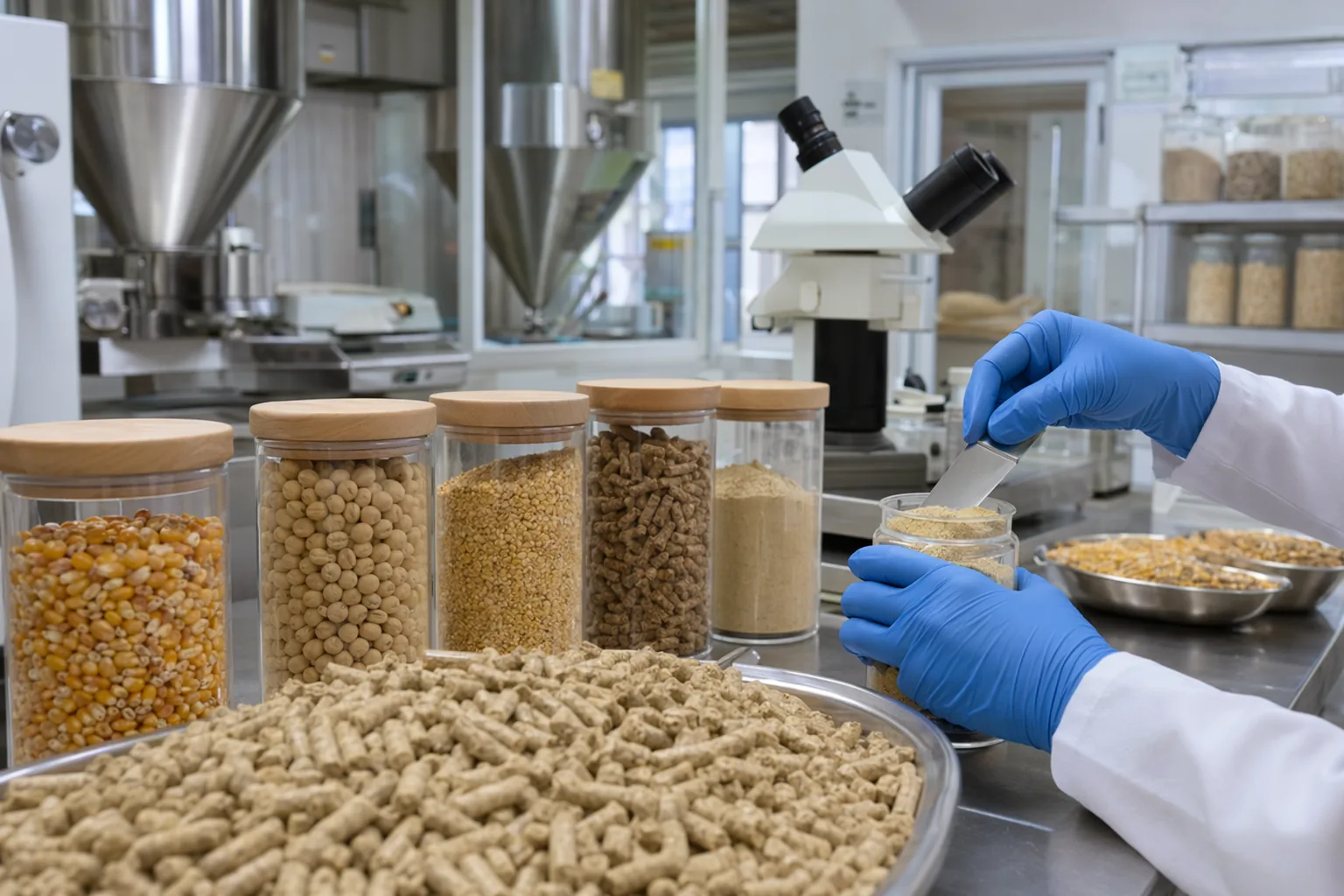
Practical guidance for selecting and validating xylanase enzyme for animal feed, with focus on dosage, pH, temperature stability, QC, and cost-in-use. To request a quote, send the product, quantity and destination through the form on the home page.
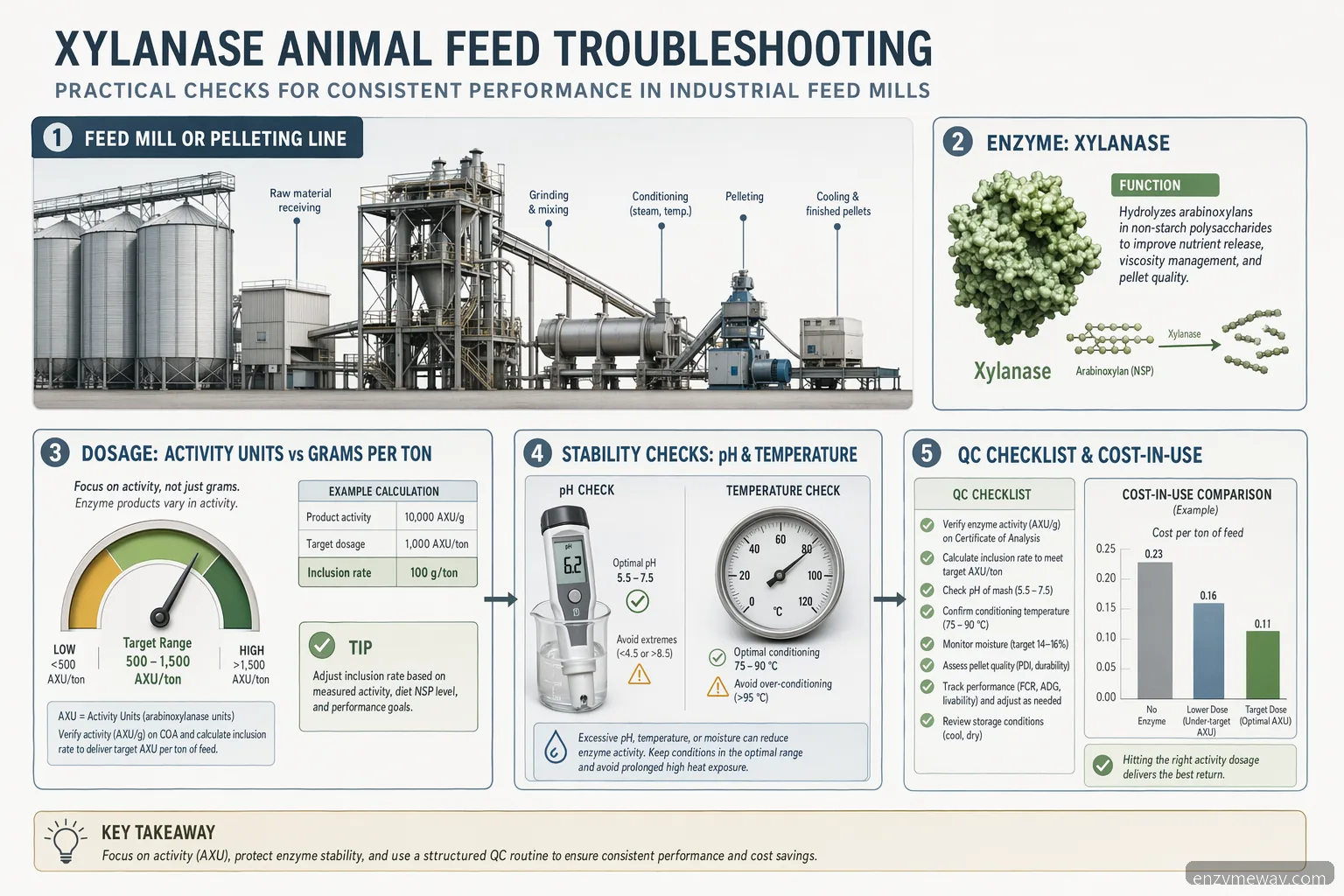
Why Xylanase Performance Varies in Animal Feed
Xylanase animal feed performance depends on more than adding an enzyme to a premix. The enzyme must hydrolyze arabinoxylans in wheat, rye, barley, corn by-products, and other cereal fractions under realistic feed and digestive conditions. Variation in raw material fiber level, soluble non-starch polysaccharides, pelleting temperature, conditioning time, moisture, and mineral premix interactions can change observed results. A xylanase supplier for animal feed should help buyers connect enzyme activity data to the actual diet matrix, not only provide a generic inclusion rate. For poultry, swine, and other monogastric feeds, the practical goal is usually lower digesta viscosity, improved nutrient release, and more consistent feed utilization. In ruminant or specialty feeds, the objective may differ. Troubleshooting starts by confirming the substrate challenge, processing route, target species, and whether the product is coated, granulated, powder, or liquid.
Review cereal type and inclusion rate before changing dosage. • Confirm whether the enzyme is intended for mash, pellet, or liquid application. • Compare lab activity with expected performance under plant conditions.
Dosage: Use Activity Units, Not Only Grams per Ton
A typical xylanase enzyme for animal feed may be applied in the broad range of 500 to 2,000 activity units per kilogram of finished feed, or approximately 50 to 200 grams per metric ton, depending on product concentration. These ranges are only starting points because activity unit definitions vary by assay, substrate, pH, and temperature. Always compare dosage on the same declared activity basis shown in the TDS and COA. Under-dosing often appears as inconsistent litter quality, variable feed conversion, or limited response in high-wheat formulas. Over-dosing may increase cost without proportional benefit. A structured trial should include a negative control, recommended dose, and one higher dose, with feed samples retained for activity confirmation. For procurement, request the supplier’s recommended dose by species, diet type, and processing method, then convert it into cost-in-use per metric ton of feed.
Ask for activity units per gram and assay conditions. • Run dose-response trials before commercial commitment. • Calculate cost per active unit, not only price per kilogram.
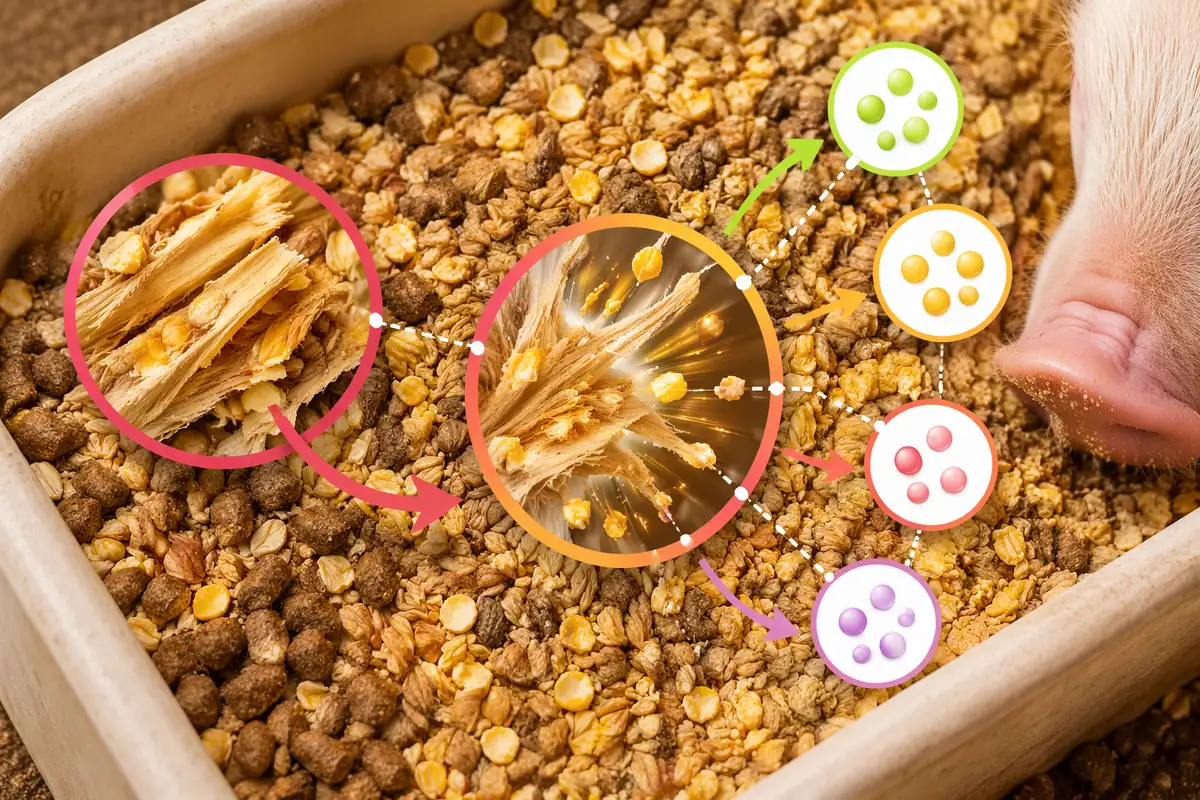
pH and Temperature Conditions to Check
Industrial xylanase enzyme animal feed products should be selected against the pH and temperature profile they will face. Many feed xylanases are designed to work in acidic to mildly acidic conditions, commonly around pH 3.5 to 6.5, which aligns with key sections of the monogastric digestive tract. However, activity curves differ by enzyme source and formulation. Temperature is equally important. Mash mixing may be mild, but pelleting can expose enzymes to 75 to 90°C, sometimes higher, for 30 to 90 seconds depending on conditioner design. Heat-stable or coated products may retain more activity, but this must be verified with post-pellet enzyme recovery tests. Liquid xylanase applied after pelleting avoids conditioner heat but requires spray uniformity, tank hygiene, and compatibility with other liquids. Do not assume a xylanase baking product will survive feed pelleting conditions.
Target pH data should cover approximately pH 3.5–6.5. • Request heat stability data at relevant conditioner temperatures. • Verify retained activity in finished feed, not only in premix.
Troubleshooting Low or Inconsistent Response
When xylanase for animal feed does not deliver the expected response, investigate process variables before changing suppliers. First, confirm the product was stored according to the SDS and TDS, away from excess humidity, heat, and direct sunlight. Next, check premix dilution, mixing time, and whether enzyme was added before aggressive grinding, steam conditioning, or incompatible liquid additives. Finished feed sampling should be representative, because enzyme distribution problems can be mistaken for poor enzyme quality. If pelleting is used, compare activity before and after pelleting to estimate thermal loss. Also review the diet: xylanase has limited benefit if the formula contains low arabinoxylan substrate or if another constraint, such as mycotoxin load, amino acid imbalance, or poor pellet quality, is the main performance driver. A capable xylanase enzyme supplier for animal feed should support root-cause analysis with application data and pilot validation.
Test premix, mash, and finished feed activity where possible. • Check storage temperature, moisture exposure, and product age. • Review diet substrate level before increasing inclusion rate. • Confirm mixing uniformity with a validated sampling plan.
Supplier Qualification for B2B Feed Buyers
Choosing a xylanase supplier for animal feed is a technical procurement decision. Buyers should request a current COA for each batch, a TDS with activity definition and recommended application range, and an SDS covering safe industrial handling. The supplier should disclose formulation type, carrier considerations, storage conditions, shelf-life basis, and compatible application methods. For imported or contract-manufactured material, clarify traceability, batch numbering, documentation lead time, and change notification practices. Avoid relying on claims made for other markets. A xylanase baking supplier for animal feed evaluation must still prove feed-grade suitability, pelleting stability, and animal feed application data; xylanase baking for animal feed is not automatically interchangeable. Supplier qualification should include sample testing, pilot feed production, post-pellet recovery, and cost-in-use comparison against your current enzyme program.
Require COA, TDS, SDS, and batch traceability. • Ask for change notification and shelf-life support. • Validate in your feed mill before long-term supply agreements.
Pilot Validation and Cost-in-Use Modeling
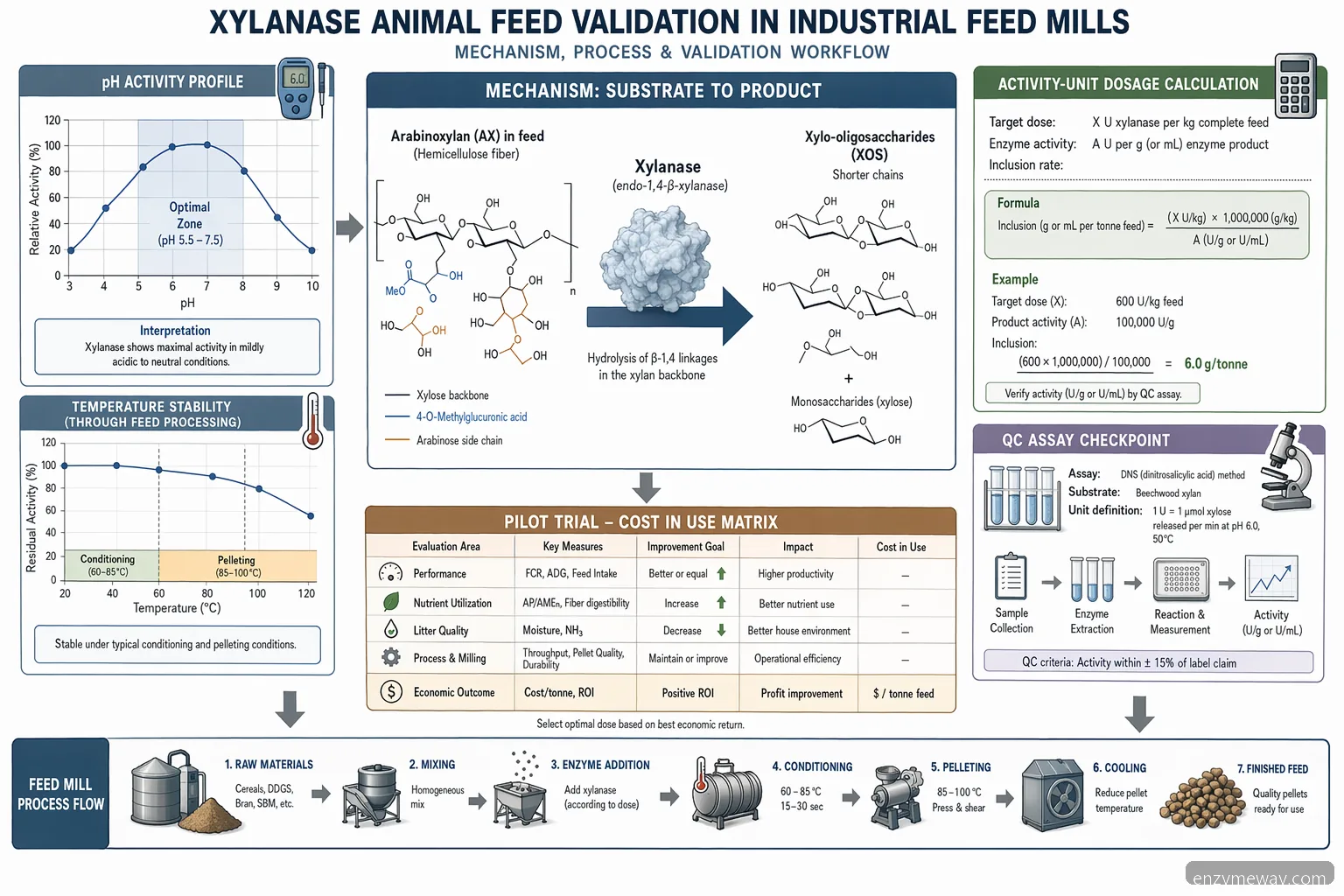
Before scaling an industrial xylanase enzyme animal feed program, run a pilot that mirrors commercial conditions. Use the same raw material sourcing, grinder screen, mixer sequence, conditioning temperature, pellet die, cooling time, and packaging method where practical. Measure enzyme recovery, feed moisture, pellet durability, and any relevant production parameters such as throughput or conditioner settings. For animal performance validation, work with qualified nutrition and production teams to define endpoints such as feed conversion, body weight gain, litter or manure indicators, and diet energy reformulation assumptions. Cost-in-use should include enzyme price, dosage, retained activity after processing, logistics, storage losses, handling labor, and potential formulation savings. A lower purchase price can be uneconomical if higher dosage or poor heat stability is required. Pilot data gives procurement and nutrition teams a common basis for supplier selection.
Compare products at equivalent active dose. • Include processing losses in cost calculations. • Document assumptions used for matrix value or reformulation.
Technical Buying Checklist
Buyer Questions
A practical starting range is often 500–2,000 declared activity units per kilogram of finished feed, or about 50–200 grams per metric ton for many commercial concentrates. The correct dosage depends on enzyme concentration, unit definition, diet substrate, species, and processing conditions. Always use the supplier’s TDS and COA to convert product weight into active units before comparing offers.
Some xylanase products are formulated for improved heat tolerance, but survival depends on conditioner temperature, steam quality, residence time, moisture, product coating, and feed matrix. Pelleting commonly exposes enzymes to 75–90°C for 30–90 seconds. Buyers should verify retained activity by testing mash and finished pellets, rather than relying only on general heat-stability claims.
Many animal feed applications require activity in acidic to mildly acidic conditions, commonly around pH 3.5–6.5. This range is relevant to key digestive environments in monogastric animals. However, activity curves differ significantly by enzyme source and formulation. Request pH activity data from the xylanase enzyme supplier for animal feed and match it to your target species and diet.
Qualification should include document review, sample testing, and pilot validation. Ask for COA, TDS, SDS, batch traceability, storage guidance, activity assay details, and feed application data. Then test the enzyme in your premix, mash, and pelleted feed if applicable. Compare suppliers by active dose, retained activity, technical support, logistics reliability, and total cost-in-use.
Not automatically. Xylanase baking products are optimized for dough processing and may use different activity profiles, carriers, or formulation priorities. Animal feed applications require compatibility with feed ingredients, premixing, pelleting or liquid application, and digestive pH conditions. If evaluating a xylanase baking supplier for animal feed, request feed-specific documentation, safety handling information, and pilot data before purchase.
Request a Quote: Wholesale Supply for Feed Mills, Premix Makers and Resellers
We supply xylanase to feed mills, premix and feed-additive makers, distributors and resellers on a quote basis. The product on this site is Xylanase Enzyme Powder (EC 3.2.1.8): a light tan to brown powder in activity grades of 10,000 – 100,000 U/g, packed in 25 kg fiber drums or custom packaging. Prices are quoted per order.
To get a quote, send three things: the product and activity grade, the quantity per order or per month, and the destination country or port. Add your application and process conditions if you also want trial guidance with the quote.
Use the quote form on the home page or email hello@mail.enzymeway.com.
Xylanase for Research & Industry
Need Xylanase for your lab or production process?
ISO 9001 certified · Food-grade & research-grade · Ships to 80+ countries
Frequently Asked Questions
What is the typical dosage of xylanase animal feed enzyme?
A practical starting range is often 500–2,000 declared activity units per kilogram of finished feed, or about 50–200 grams per metric ton for many commercial concentrates. The correct dosage depends on enzyme concentration, unit definition, diet substrate, species, and processing conditions. Always use the supplier’s TDS and COA to convert product weight into active units before comparing offers.
Can xylanase survive feed pelleting temperatures?
Some xylanase products are formulated for improved heat tolerance, but survival depends on conditioner temperature, steam quality, residence time, moisture, product coating, and feed matrix. Pelleting commonly exposes enzymes to 75–90°C for 30–90 seconds. Buyers should verify retained activity by testing mash and finished pellets, rather than relying only on general heat-stability claims.
What pH range should xylanase enzyme for animal feed cover?
Many animal feed applications require activity in acidic to mildly acidic conditions, commonly around pH 3.5–6.5. This range is relevant to key digestive environments in monogastric animals. However, activity curves differ significantly by enzyme source and formulation. Request pH activity data from the xylanase enzyme supplier for animal feed and match it to your target species and diet.
How should a feed mill qualify a xylanase supplier?
Qualification should include document review, sample testing, and pilot validation. Ask for COA, TDS, SDS, batch traceability, storage guidance, activity assay details, and feed application data. Then test the enzyme in your premix, mash, and pelleted feed if applicable. Compare suppliers by active dose, retained activity, technical support, logistics reliability, and total cost-in-use.
Is xylanase baking enzyme suitable for animal feed?
Not automatically. Xylanase baking products are optimized for dough processing and may use different activity profiles, carriers, or formulation priorities. Animal feed applications require compatibility with feed ingredients, premixing, pelleting or liquid application, and digestive pH conditions. If evaluating a xylanase baking supplier for animal feed, request feed-specific documentation, safety handling information, and pilot data before purchase.
Ready to source?
Turn This Guide Into a Supplier Brief Contact EnzymeWay to discuss feed-grade xylanase selection, pilot validation, documentation, and cost-in-use evaluation.
Contact Us to Contributehello@mail.enzymeway.com