Xylanase Enzyme Production: Specification Checklist for Industrial Buyers
Compare xylanase enzyme production specs for industrial buying: activity, pH, temperature, QC, COA/TDS/SDS, pilot validation, and cost-in-use.
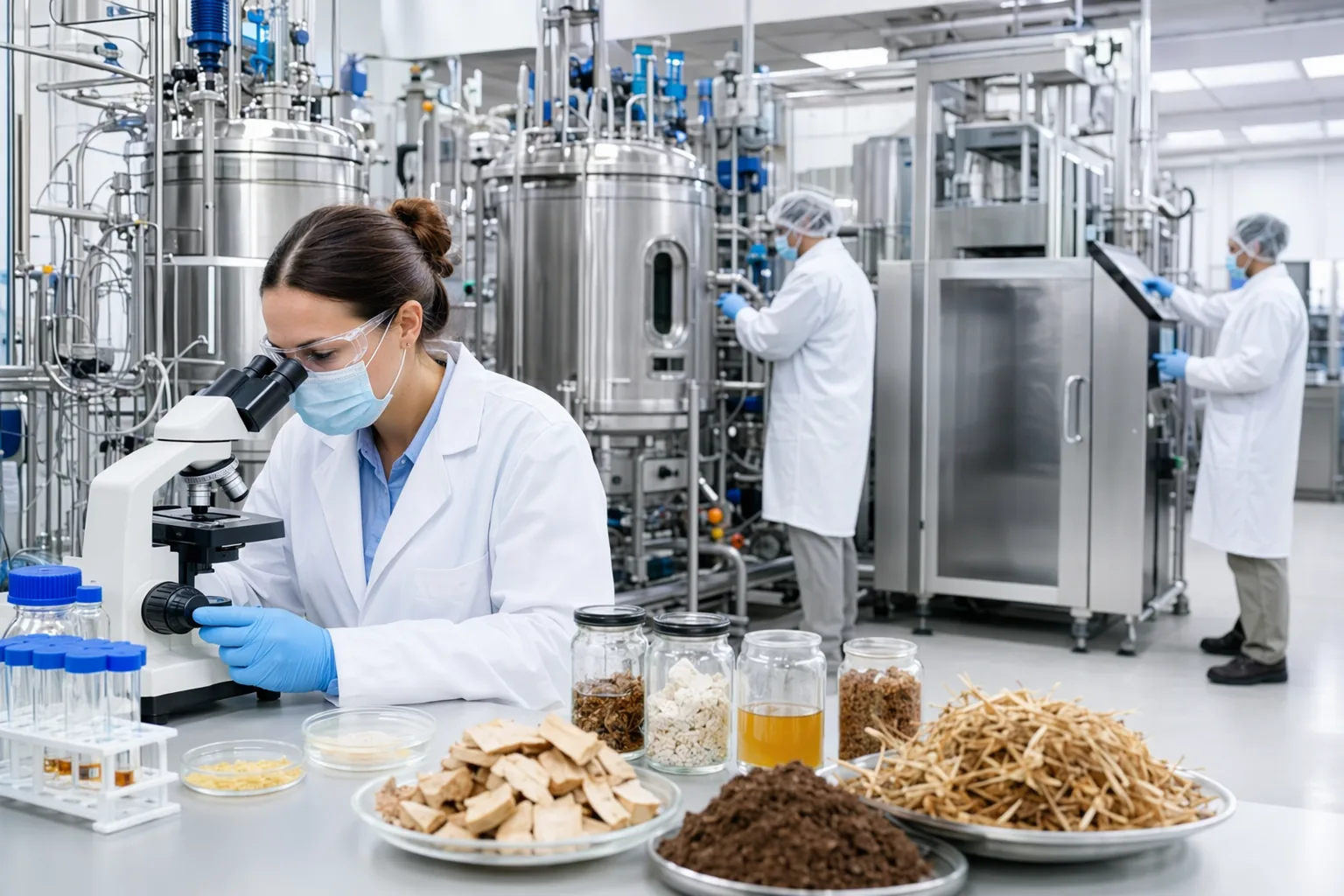
Selecting a xylanase enzyme is not only about headline activity. Compare production route, operating window, stability, documentation, and cost-in-use before scaling into baking, feed, pulp, paper, or biofuel processes.
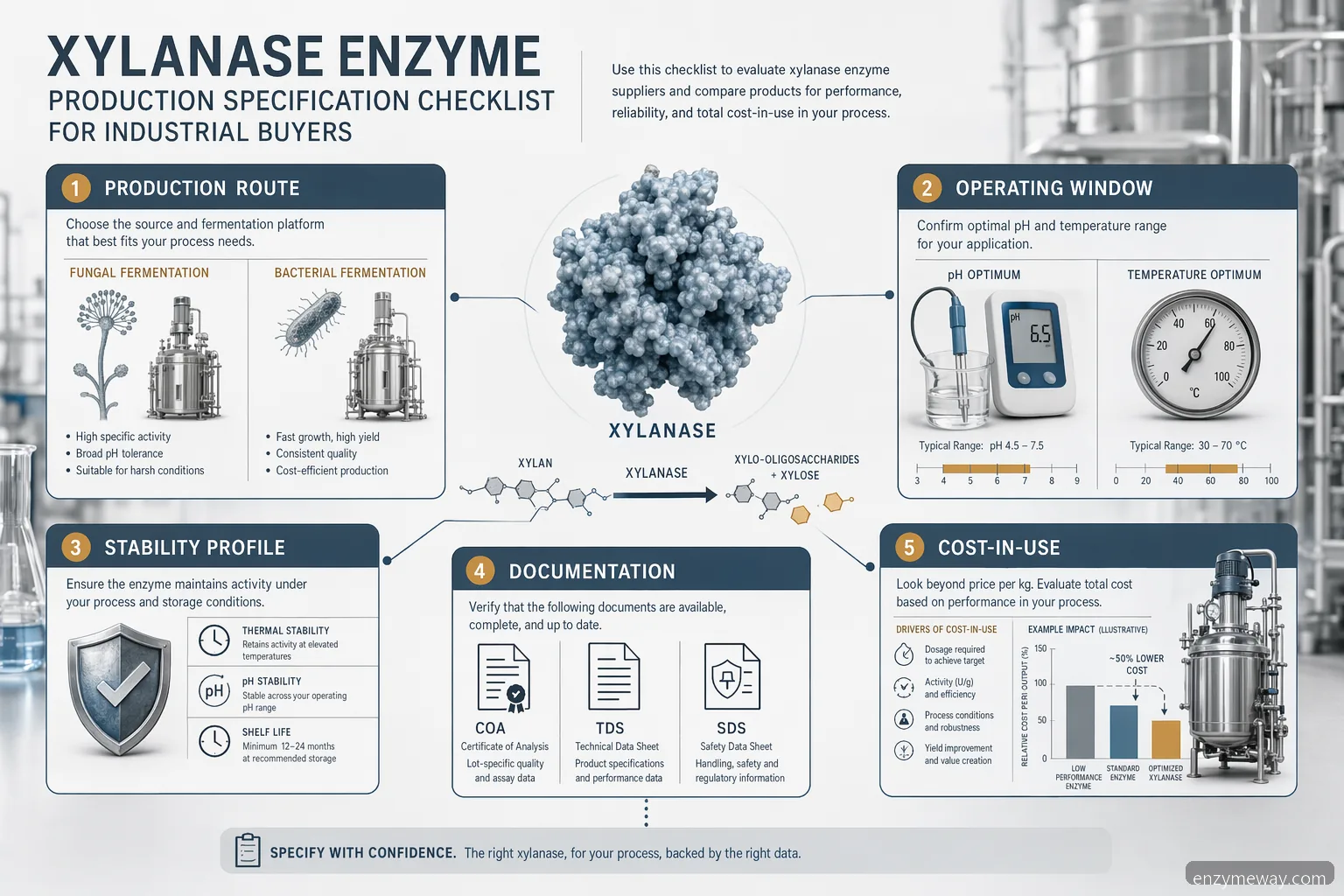
Why Xylanase Enzyme Production Specifications Matter
Industrial buyers comparing xylanase enzyme production options need more than a product name and a price per kilogram. Xylanase breaks down xylan, a major hemicellulose in plant cell walls, but the required performance varies by substrate, process pH, temperature, residence time, and formulation. A baking improver may need consistent dough handling at low dosage, while an animal feed enzyme must remain active after pelleting and release nutrients in the digestive pH range. Pulp and paper applications often emphasize fiber modification, drainage, and reduced chemical demand, while biofuel applications focus on biomass hydrolysis support. The best comparison starts with the process problem, not the enzyme catalog. Ask suppliers to define activity method, assay conditions, side activities, carrier, moisture, storage conditions, and lot-to-lot controls. This turns xylanase procurement from a commodity quote into a production specification decision.
Match enzyme type to substrate and process goal. • Compare assay method before comparing activity units. • Require application-specific pilot validation.
Production Route: Fungal and Bacterial Xylanase
Xylanase production can use fungal or bacterial strains, and each route can influence enzyme profile, stability, and formulation choice. Fungal xylanases are widely used in baking, feed, and biomass applications because many operate well in mildly acidic conditions. Xylanase enzyme production from bacteria may be selected where higher temperature tolerance, neutral-to-alkaline activity, or specific process compatibility is required. Buyers should avoid assuming one route is universally superior. Instead, compare the actual COA and TDS: declared activity, assay pH, assay temperature, optimum pH range, optimum temperature range, and residual activity after heat or storage exposure. For enzyme production media pH xylanase evaluation, suppliers should understand how fermentation pH, nutrient source, aeration, and downstream recovery affect consistency. The production organism should be disclosed at a commercially appropriate level, and the finished product should be assessed for suitability in the intended industrial use.
Fungal xylanase often fits mildly acidic processes. • Bacterial xylanase may fit neutral, alkaline, or higher-temperature needs. • Select by measured performance, not organism category alone.
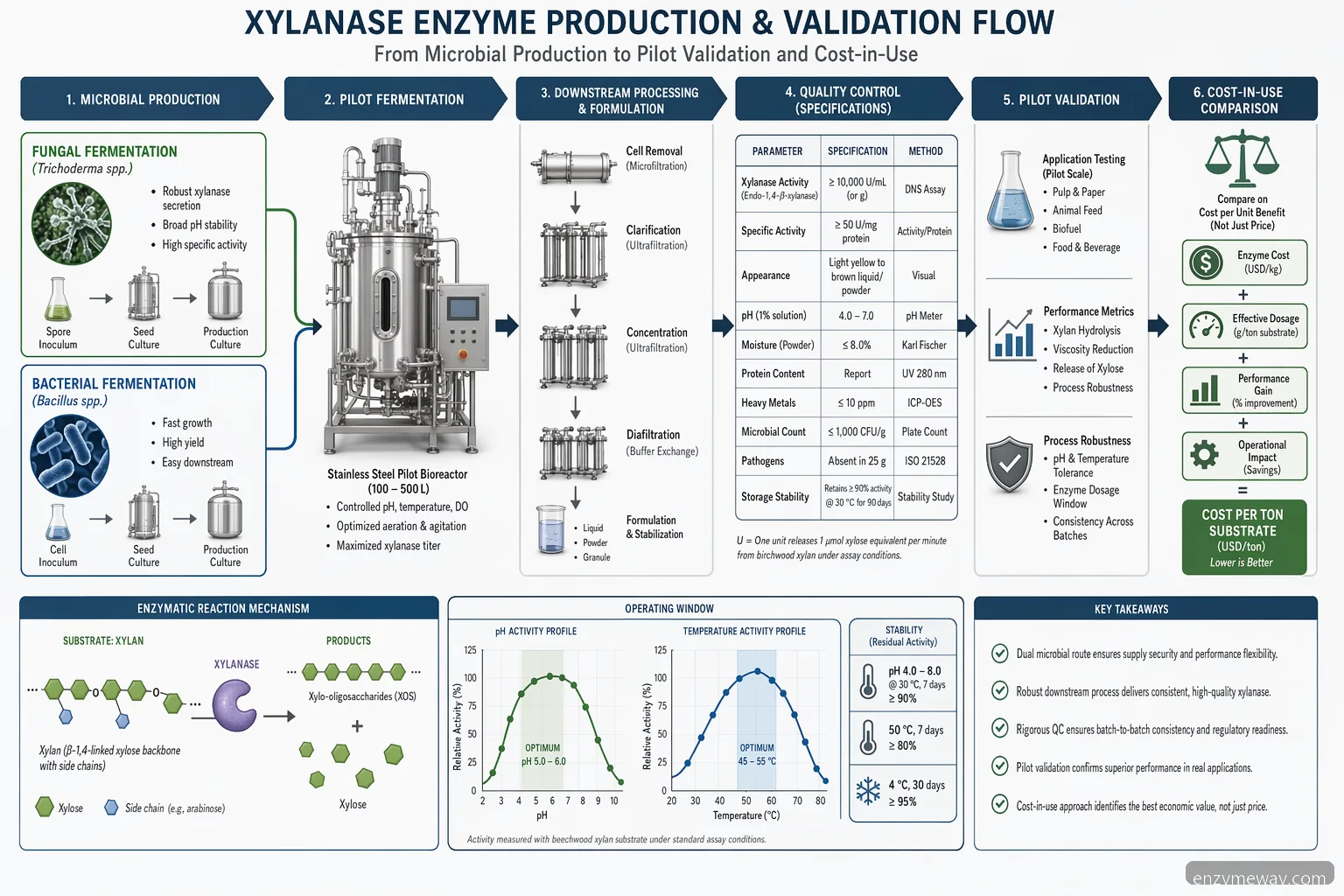
Operating Conditions to Confirm Before Scale-Up
The most useful xylanase enzyme specification states the operating window clearly. Many industrial xylanases perform in the pH 4.0 to 6.5 range, but neutral or alkaline products may be needed for some pulp and paper or detergent-adjacent processes. Temperature targets often fall between 35°C and 65°C, with heat-stable grades designed for short exposure to higher process temperatures. In baking, trial dosages are commonly evaluated in low parts-per-million ranges based on flour weight, then adjusted for flour quality and dough system. In animal feed, dosage is normally calculated per metric ton of finished feed and must account for pelleting temperature, moisture, and retention time. Pulp, paper, and biofuel trials may be dosed by dry substrate, pulp mass, or process volume. Confirm residence time, mixing, compatibility with oxidants or preservatives, and residual activity after processing before approving a production batch.
Confirm pH range under real substrate conditions. • Test temperature stability after actual heat exposure. • Set dosage by cost-in-use, not label rate alone. • Check compatibility with other processing aids.
QC Checklist: COA, TDS, SDS, and Batch Consistency
A reliable xylanase enzyme supplier should provide current technical documentation for every commercial grade. The Certificate of Analysis should identify batch number, activity result, assay method reference, appearance, moisture or solids where relevant, and release date. The Technical Data Sheet should describe application area, recommended pH and temperature range, storage, shelf life, dosage guidance, and handling notes. The Safety Data Sheet should cover safe industrial handling, dust or aerosol precautions, personal protective equipment, and transport information. Buyers should also request batch-to-batch trend data when the enzyme is critical to output quality. QC checks may include activity assay, microbiological limits where applicable, heavy metal screening if relevant to the application, and stability testing under storage conditions. If the supplier changes formulation, carrier, concentration, or manufacturing site, a technical change notification process should be in place before production use.
Request COA for each batch. • Review TDS for operating window and dosage guidance. • Use SDS for industrial handling controls. • Ask about change notification procedures.
Pilot Validation and Cost-in-Use Comparison
For buyers searching to buy xylanase enzyme, the lowest unit price is rarely the lowest process cost. Cost-in-use should include dosage, activity retention, yield improvement, waste reduction, throughput, handling convenience, storage loss, and consistency. A structured pilot compares two or more xylanase products under the same substrate, pH, temperature, residence time, mixing, and downstream conditions. Baking trials can track dough extensibility, loaf volume, crumb structure, and process tolerance. Animal feed trials can assess pelleting recovery and in vitro substrate response before larger feeding evaluations. Pulp and paper trials may monitor drainage, brightness support, fiber strength, and chemical savings. Biofuel trials may evaluate viscosity reduction, sugar release, and compatibility with cellulase systems. Ask the supplier for sample support, application guidance, and scale-up recommendations, then document a pass/fail specification before issuing routine purchase orders.
Run side-by-side pilots at identical conditions. • Track both technical output and handling cost. • Approve a written specification before routine supply.
Supplier Qualification for Long-Term Xylanase Supply
Supplier qualification should cover technical capability, documentation quality, communication speed, and supply reliability. Ask how the supplier controls xylanase production, formulation, packaging, storage, and shipment. Confirm whether the product is liquid, powder, granule, or coated form, because this affects dosing equipment, dust control, mixing uniformity, and shelf life. For international purchasing, clarify lead time, minimum order quantity, packaging size, labeling, customs documents, and temperature exposure during transit. Quality agreements may define specification limits, retained samples, complaint handling, and notification timelines for significant process or raw material changes. Buyers should also assess whether the supplier can support multiple applications, such as xylanase baking, xylanase animal feed, pulp and paper, and biofuel, without forcing a single generic grade into every process. A qualified supplier helps convert laboratory activity into stable industrial performance.
Confirm format: liquid, powder, granule, or coated. • Review lead time, MOQ, and packaging options. • Define complaint and change-control expectations. • Prefer suppliers with application-specific support.
Technical Buying Checklist
Buyer Questions
Xylanase enzyme is a biocatalyst that hydrolyzes xylan, a hemicellulose found in plant materials such as grain, bran, wood fiber, and agricultural residues. In industrial production, it is used to modify plant cell wall structure, improve processing, or support conversion of biomass. The relevant specification depends on substrate, pH, temperature, residence time, dosage format, and downstream quality targets.
Compare the finished enzyme’s performance, not only the source organism. Fungal xylanase often suits mildly acidic processes, while bacterial xylanase may offer benefits in neutral, alkaline, or higher-temperature conditions. Request COA, TDS, activity assay details, pH and temperature profiles, stability data, and pilot samples. The better choice is the grade that delivers consistent results at your actual process conditions.
Important QC checks include activity assay, appearance, moisture or solids content, pH of solution where relevant, microbiological limits where applicable, and stability under recommended storage conditions. Buyers should require a batch-specific COA, a current TDS, and an SDS. For critical processes, ask for batch trend data, retained sample policy, and notification rules for formulation or manufacturing changes.
Common xylanase enzyme uses include dough improvement in baking, nutrient release support in animal feed, fiber modification in pulp and paper, and biomass processing in biofuel production. Each application needs a different specification. Baking may prioritize dough tolerance, feed may prioritize pelleting stability, pulp may need process compatibility, and biofuel may focus on viscosity reduction and sugar release.
Cost-in-use combines enzyme price with the dosage needed to achieve the target result, activity retained during processing, handling losses, storage stability, and the value of process improvements. A valid trial compares products under identical pH, temperature, substrate, mixing, and residence time. The best purchase is usually the enzyme that provides repeatable production benefit at the lowest total operating cost.
Xylanase for Research & Industry
Need Xylanase for your lab or production process?
ISO 9001 certified · Food-grade & research-grade · Ships to 80+ countries
Frequently Asked Questions
What is xylanase enzyme in industrial production?
Xylanase enzyme is a biocatalyst that hydrolyzes xylan, a hemicellulose found in plant materials such as grain, bran, wood fiber, and agricultural residues. In industrial production, it is used to modify plant cell wall structure, improve processing, or support conversion of biomass. The relevant specification depends on substrate, pH, temperature, residence time, dosage format, and downstream quality targets.
How should buyers compare xylanase enzyme production from bacteria and fungi?
Compare the finished enzyme’s performance, not only the source organism. Fungal xylanase often suits mildly acidic processes, while bacterial xylanase may offer benefits in neutral, alkaline, or higher-temperature conditions. Request COA, TDS, activity assay details, pH and temperature profiles, stability data, and pilot samples. The better choice is the grade that delivers consistent results at your actual process conditions.
What QC checks are important before buying xylanase enzyme?
Important QC checks include activity assay, appearance, moisture or solids content, pH of solution where relevant, microbiological limits where applicable, and stability under recommended storage conditions. Buyers should require a batch-specific COA, a current TDS, and an SDS. For critical processes, ask for batch trend data, retained sample policy, and notification rules for formulation or manufacturing changes.
What are common xylanase enzyme uses in B2B applications?
Common xylanase enzyme uses include dough improvement in baking, nutrient release support in animal feed, fiber modification in pulp and paper, and biomass processing in biofuel production. Each application needs a different specification. Baking may prioritize dough tolerance, feed may prioritize pelleting stability, pulp may need process compatibility, and biofuel may focus on viscosity reduction and sugar release.
How is cost-in-use calculated for xylanase production trials?
Cost-in-use combines enzyme price with the dosage needed to achieve the target result, activity retained during processing, handling losses, storage stability, and the value of process improvements. A valid trial compares products under identical pH, temperature, substrate, mixing, and residence time. The best purchase is usually the enzyme that provides repeatable production benefit at the lowest total operating cost.
Ready to source?
Turn This Guide Into a Supplier Brief Request a xylanase specification review, sample, and pilot-trial support for your production process.
Contact Us to Contribute